SMS Marketing for Small Business in Sri Lanka: A Practical Guide
A practical guide to SMS marketing for small businesses in Sri Lanka: campaign examples, sender IDs, consent, timing, and what SMS campaigns cost.

If you run a small business in Sri Lanka, your customers’ phone numbers are probably the most valuable list you own. You collect them on invoices, booking forms and delivery slips. Most businesses never use them for anything beyond the odd phone call.
SMS marketing turns that list into a channel you control. No algorithm decides who sees your message, there’s no app to install, and it works on every phone, from the latest smartphone to a basic handset. This guide is written for owners and managers of small businesses: what SMS marketing is good for, how to run your first campaign properly, and what it costs.
What SMS marketing actually is
SMS marketing means sending short text messages to customers who have agreed to hear from you. There are two kinds of business SMS, and it helps to keep them apart.
- Promotional SMS are offers, new arrivals, event invitations and seasonal sales. They are what most people mean by “SMS marketing”.
- Transactional SMS are messages a customer expects because of something they did: an order confirmation, a payment receipt, an appointment reminder or a one-time password.
Both go through an SMS gateway, the service that delivers messages from your computer or system to mobile phones on Dialog, Mobitel, Hutch and Airtel. This guide focuses on promotional campaigns, with a short section on the transactional messages that support them.
Why SMS still works for small businesses
Small businesses usually can’t outspend larger competitors on ads. SMS levels the field in a few practical ways.
- It reaches everyone. Not every customer is active on Facebook, Instagram or WhatsApp, but nearly everyone reads their text messages.
- It’s short by design. One message holds 160 characters in English, or 70 in Sinhala or Tamil. That forces a clear, simple offer, which is usually what converts.
- It’s fast to launch. A campaign can go out within an hour of deciding to run it. No designer, no landing page, no ad approval.
- You own the list. Your customer numbers don’t disappear when a platform changes its rules or your page loses reach.
SMS isn’t a replacement for your other channels. It works best as the nudge that brings people back: to your website, your showroom, your clinic or your WhatsApp chat.
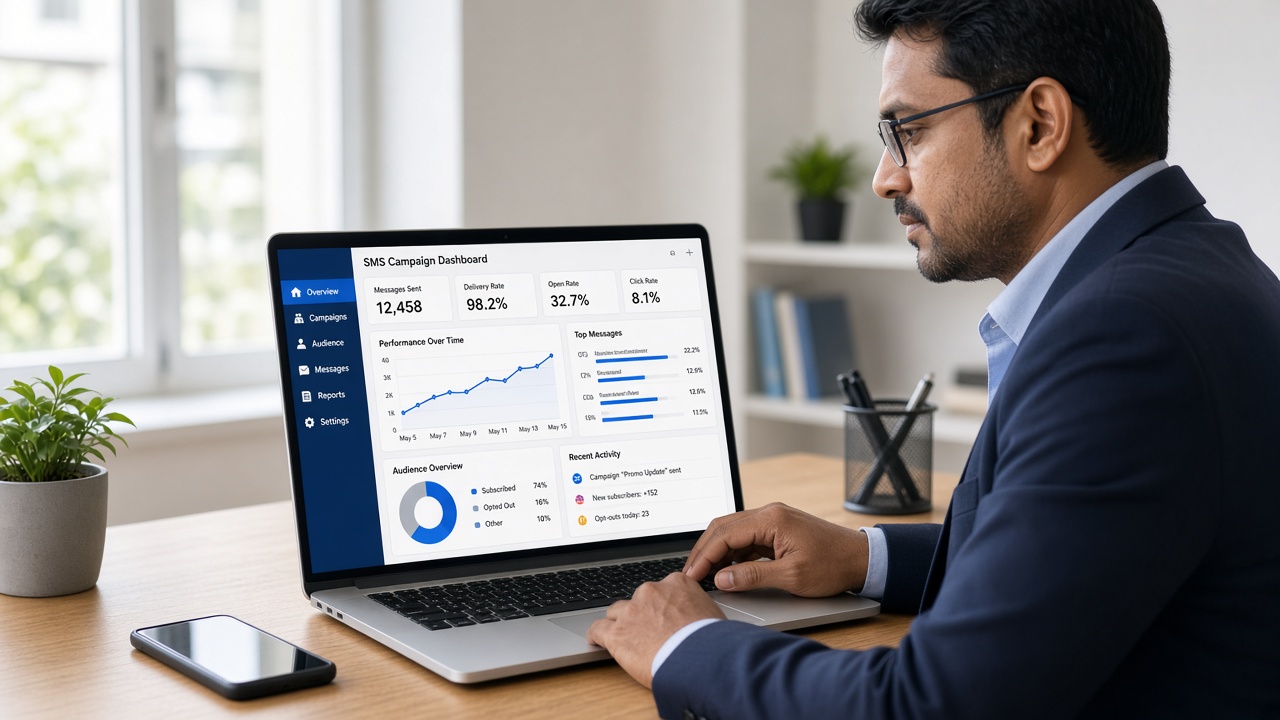
SMS marketing examples that suit small businesses
The best campaigns are simple and tied to a reason to act now. Here are examples that fit common small businesses in Sri Lanka.
Seasonal offers. Avurudu, Vesak, Ramadan and Eid, Deepavali and Christmas are when customers are already planning to buy. A short message a few days before the season starts tends to do better than one on the day itself.
Avurudu offer from Lanka Office Supplies: 15% off all printer ink until 12 April. Order: 07X XXX XXXX. Reply STOP to opt out.
Appointment and booking reminders. Clinics, salons, tutors, consultants and service centres lose money on no-shows. A reminder the day before is one of the most useful messages you can send.
Re-engagement. A customer who hasn’t bought in six months is easier to win back than a stranger. A simple “we haven’t seen you in a while” message with a small incentive is often enough.
New stock or new service. Tell existing customers first. They already trust you, so they respond faster than a cold audience.
Event invitations. Product launches, open days, seminars and workshops. Send the invitation a week ahead and a reminder the day before.
How to run your first campaign
1. Build a permission-based list
Only message people who have agreed to hear from you. Add a tick box to your invoices, booking forms or website checkout that says customers can receive offers by SMS. Sri Lanka’s Personal Data Protection Act (No. 9 of 2022) sets out how businesses should collect and use personal data, so clear consent is good practice and protects your reputation.
2. Get a sender ID
A sender ID is the name your message shows instead of a random number, for example “LankaOffice”. Customers are far more likely to read a message from a name they recognise. Sender IDs are registered with the mobile networks through your SMS provider, so ask your provider how long registration takes and plan your first campaign around it.
3. Segment before you send
Even a small list can be split in useful ways: by location (Colombo vs outstation), by what people bought, or by how recently they bought. A message that fits the reader always beats one blast to everyone.
4. Write a message that earns the click
Keep it to one SMS if you can. A good structure is:
- who you are (your sender ID and brand name),
- the offer, in plain words,
- a deadline,
- one action: a phone number, a short link or “reply YES”,
- a clear way to opt out.
Write in the language your customers use with you. If most of them speak to you in Sinhala or Tamil, send in Sinhala or Tamil, and remember those messages hold 70 characters per SMS instead of 160.
5. Send at the right time
Send during normal waking hours, never late at night or very early in the morning. Weekday late mornings and early evenings are a sensible starting point. Avoid sending the same offer more than once in a short period.
6. Measure and adjust
Use a short tracked link or a unique offer code so you can see who responded. Compare the sales you can trace to the campaign with what it cost to send. After two or three campaigns you’ll know which messages, times and segments work for your customers.

Transactional messages that support your marketing
Promotions bring customers in. Transactional messages keep them happy, which makes your next promotion more welcome. For a small business, the most useful ones are:
- order or booking confirmations,
- payment receipts,
- delivery or “ready for collection” updates,
- appointment reminders.
These can go out automatically from your website, booking system or online store through an SMS API, so nobody has to type them. Keep promotional content out of transactional messages; customers trust them more when they’re purely informational.
SMS or WhatsApp: which should a small business use?
Many small businesses use both. SMS reaches every phone, needs no app and suits short offers and reminders. WhatsApp suits conversations, images, catalogues and back-and-forth customer service, but its business messaging has its own per-message charges and rules. If you’re weighing that up, our guide to WhatsApp Business API pricing in Sri Lanka explains how those costs work.
A simple approach: use SMS for reminders, alerts and short time-limited offers, and WhatsApp for conversations once a customer replies.
Common mistakes to avoid
- Messaging people who never opted in. It annoys customers and damages your brand name.
- Sending too often. One or two promotional messages a month is plenty for most small businesses.
- No opt-out. Always tell people how to stop receiving messages, and honour it quickly.
- Vague offers. “Big sale this weekend” is weaker than “20% off all office chairs until Sunday”.
- No tracking. Without a code or link, you can’t tell which campaigns paid for themselves.
What SMS marketing costs a small business
SMS is usually sold as prepaid credits, priced per message in rupees. Your total cost depends on three things: how many people are on your list, how often you send, and how long your messages are. A Sinhala or Tamil message longer than 70 characters, or an English one longer than 160, uses more than one credit.
When you compare providers, ask about:
- the price per SMS and any volume rates,
- how long credits stay valid,
- sender ID registration and timing,
- whether there’s a monthly fee,
- delivery reports, so you can see which messages arrived.
Digital Urgency SMS is available in Standard, Premium and Enterprise plans. Pricing depends on your volume, so please request a quote and we’ll send you a clear rupee price for your list size.
Getting started
You don’t need a big budget or a marketing team to start. Begin with the customers who already know you, get their permission, write one clear offer and measure what happens. Small, regular, relevant messages build more sales over a year than one large blast.
If you’d like help setting up your sender ID, building your first list or planning a campaign calendar, talk to our team and we’ll help you get your first SMS campaign out the door.
Want this done for your business?
Book a free 30-minute strategy call and we'll map it to your situation.
Book a Strategy Call